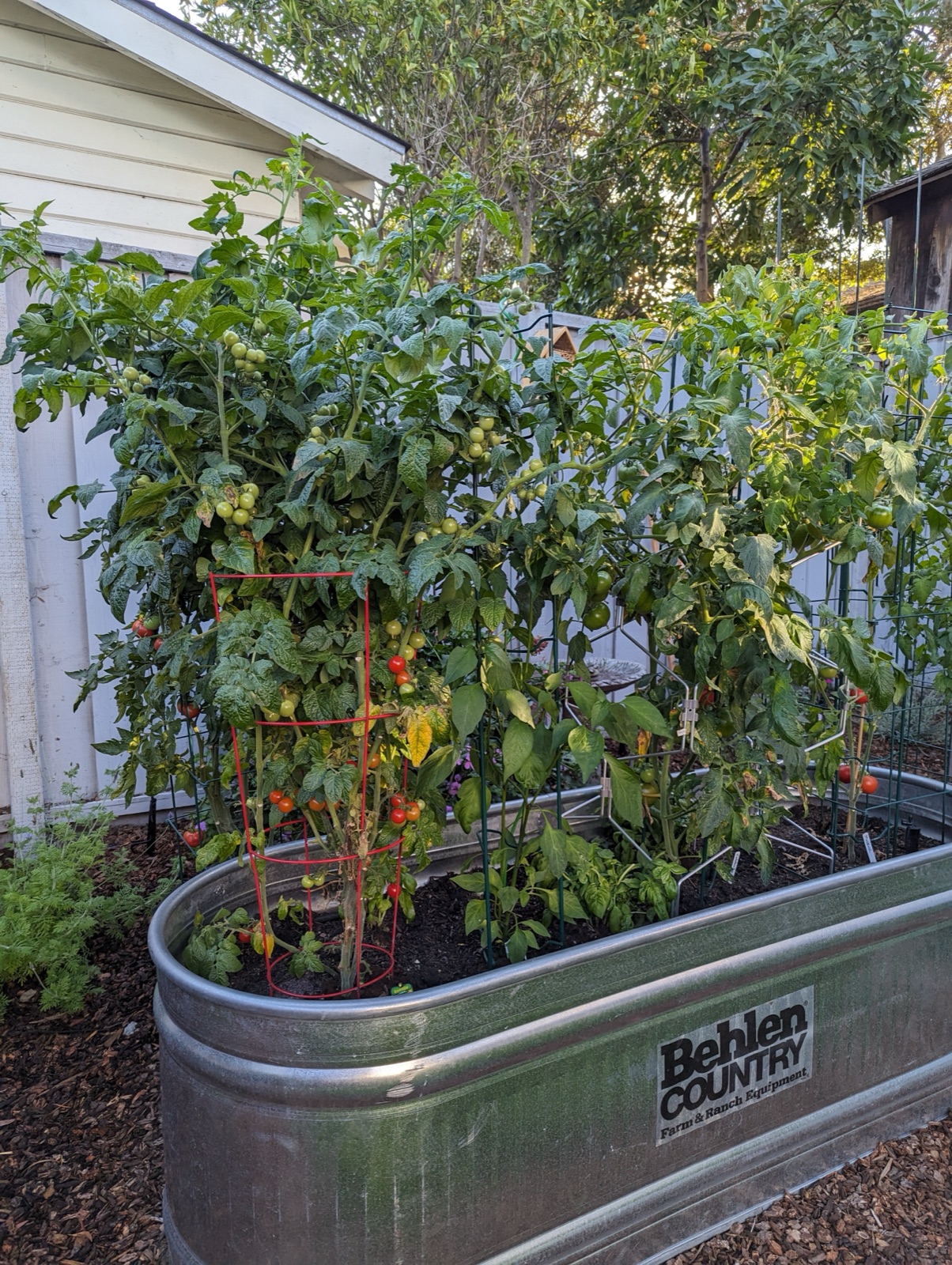
My mom grew vegetables, and I remember walking around her garden, looking at the eggplant, tomatoes, onions, chili peppers, and spinach growing. I loved helping harvest them. Now I grow my own. In a mild coastal climate you can grow vegetables all year: cool-season crops through fall and winter, and warm-season crops like tomatoes, peppers, and cucumbers in summer (UC Master Gardeners (opens in a new tab)). I write down every crop: the variety, when it went in, and how it did. Next year's plan comes from that, not from a seed packet written for somewhere hotter.
Why Climate Matters
My garden is in coastal California: dry summers, mild winters, and cool air off the ocean and the bay (UC Master Gardeners (opens in a new tab)). Summer days are often in the 60s and low 70s, with fog, and UC puts gardens like this in its coolest zone for tomatoes (UC ANR (opens in a new tab)).
That's why my tomatoes ripen late. They need nights above about 55°F to set fruit (UC Master Gardeners (opens in a new tab)), and in a cool summer like this one, fruit didn't set until July. Cucumbers want warmth too (UMN Extension (opens in a new tab)); this summer topped out around the mid 80s, and mine still gave a great yield.
Mild winters work the other way. Peppers are tender perennials that come back where it doesn't freeze (UF/IFAS Extension (opens in a new tab)), so my Thai chili and Italian sweet pepper return every spring. Cool-season crops like broccoli grow through winter, which is also when rats found mine. Mild winters can shortchange fruit trees that need winter chill (UC Master Gardeners (opens in a new tab)), and my plum has struggled since a heat wave in February 2026.
Seed packets and online guides are often written for hotter summers or colder winters, so their planting dates and days to maturity can be off here. Even nearby gardens differ, from cool coastal fog to hot inland sun, which is why the local planting calendars come in hot, sunny, and foggy versions (UC Master Gardeners (opens in a new tab)).
Growing a Diverse Garden
I grow many different vegetables and fruit, not just one or two, and I surround the planters with pollinator-friendly natives and flowering plants. Two permaculture principles describe why that works.
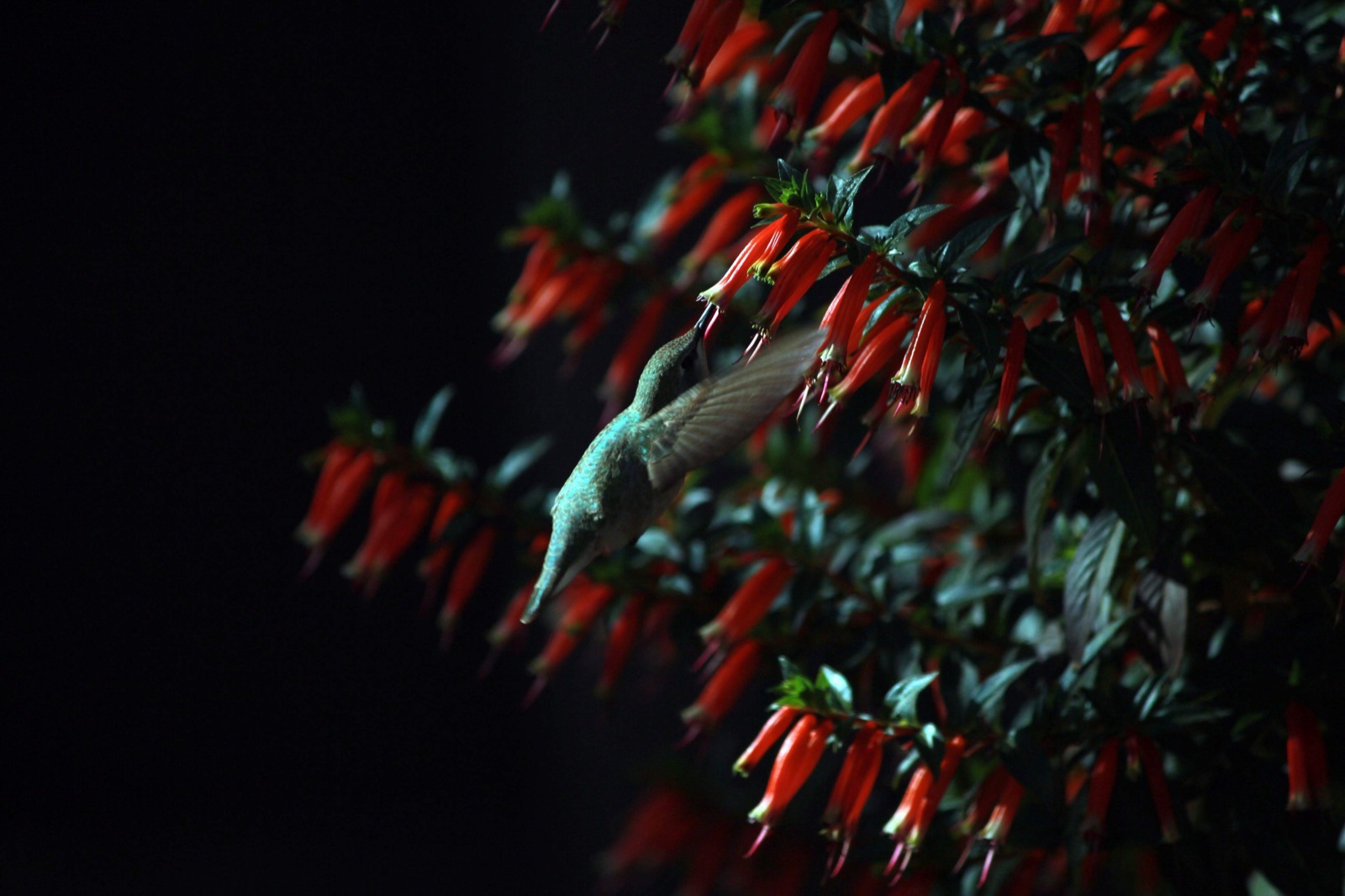
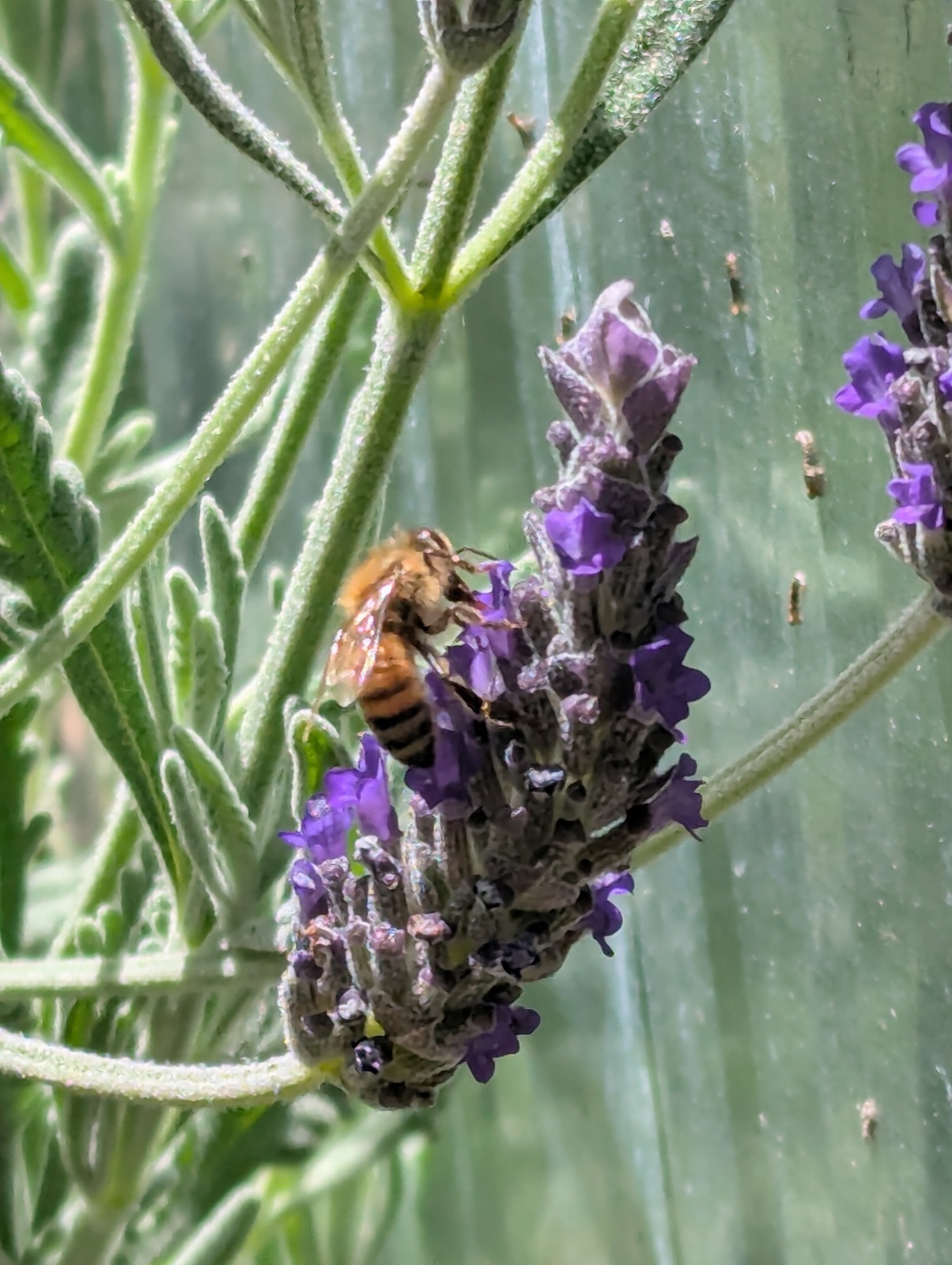
An Anna's hummingbird feeding at the cigar plantAn Anna's hummingbird working the flowers, May 2025A bee on lavender, May 2025Monkey flower, cigar plant and magenta salvia by the vegetable beds, September 2026Close up of the cigar plant flowers, September 2026The bird bath, September 2026
At Hidden Villa
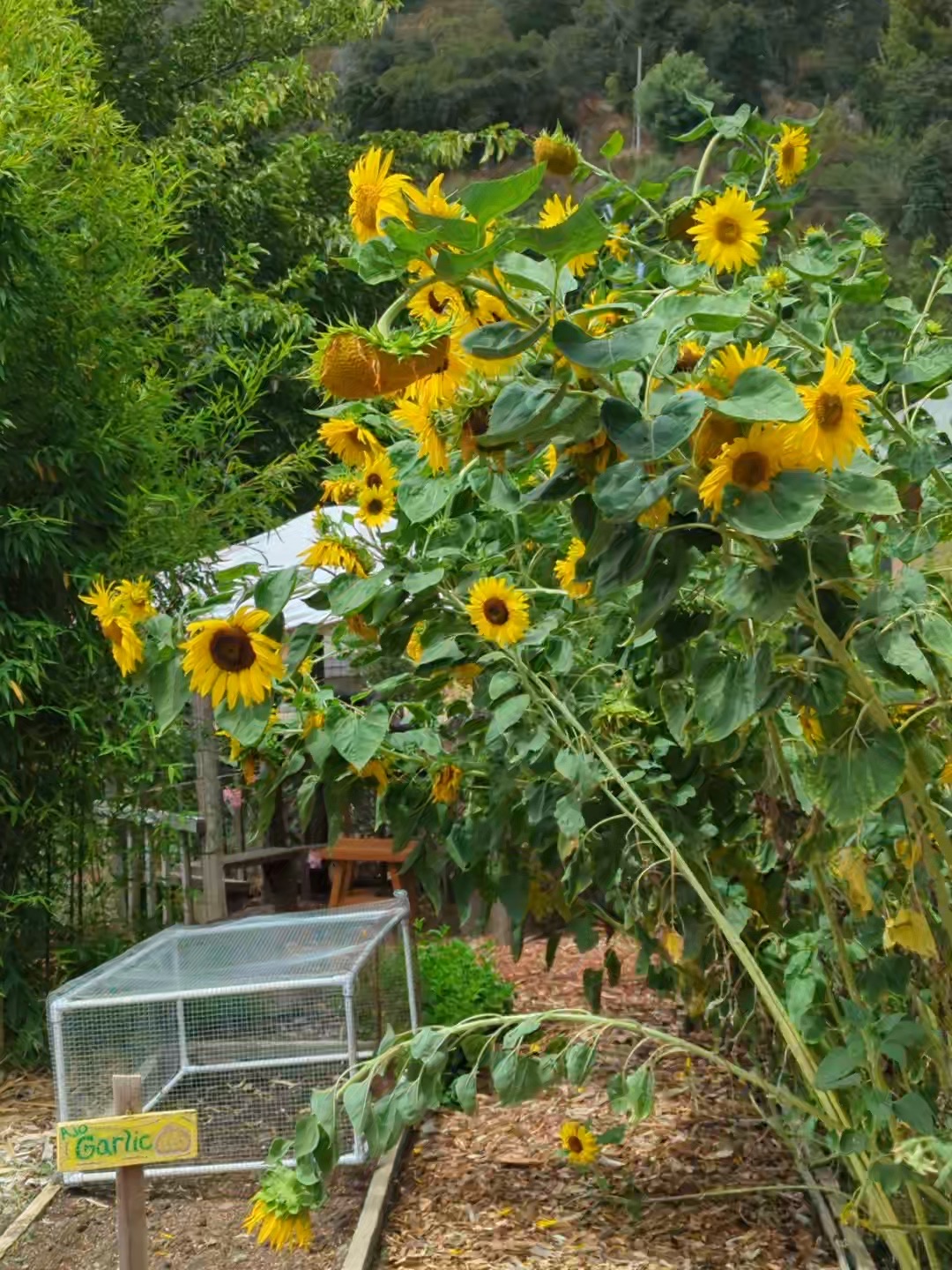
For a bigger version of the same idea, visit Hidden Villa (opens in a new tab) in Los Altos Hills. Its organic farm keeps a pollinator garden, and the sunflowers below are from there.
Sunflowers in the organic pollinator garden at Hidden Villa, Los Altos HillsHidden Villa's organic garden, August 2024Sunflowers at Hidden Villa, August 2024
Season Reports
Worked, mixed, or failed, and why.
1 season
Basil
HarvestedBasil, Summer 2026. Harvested Sept 2026
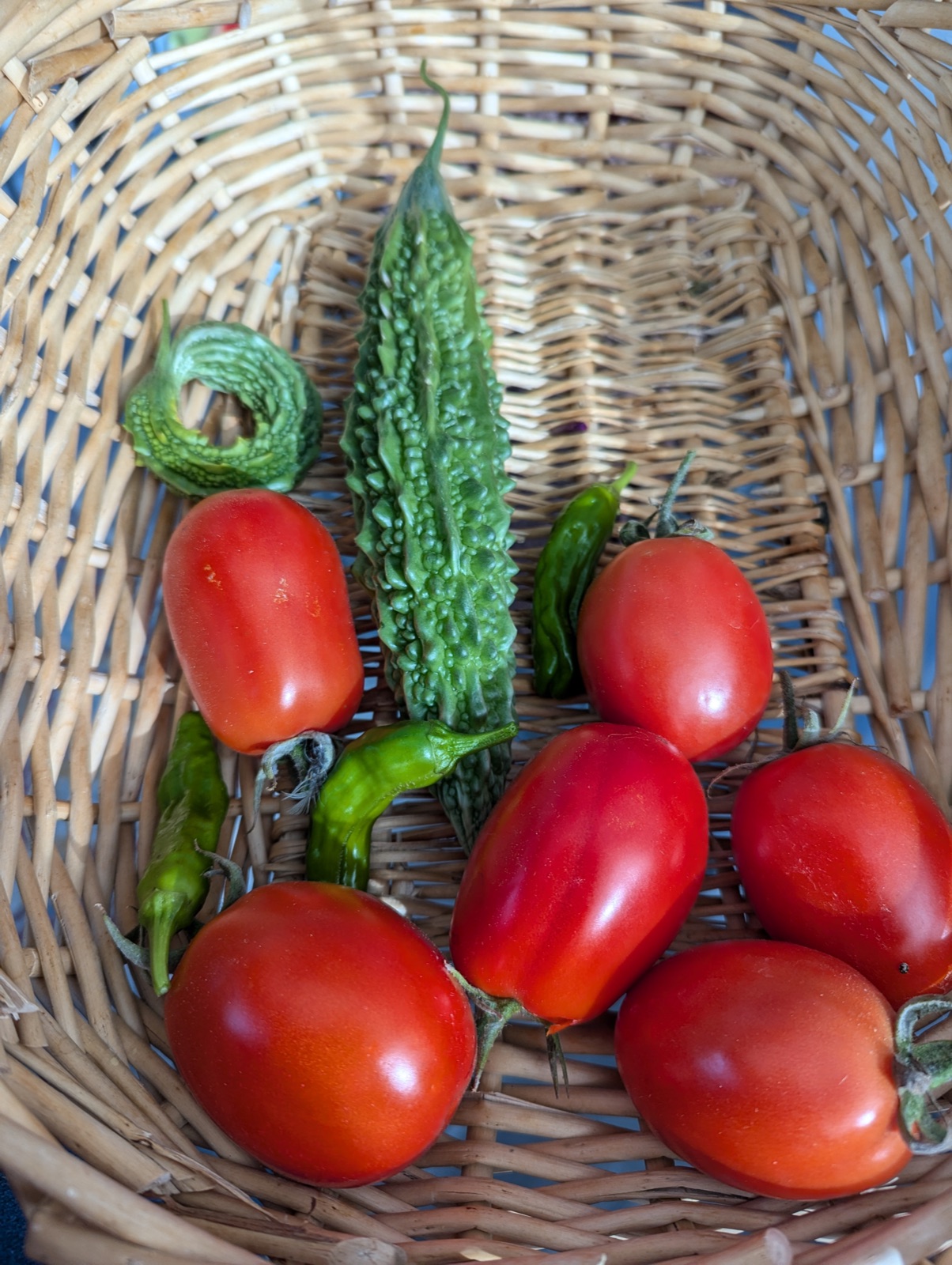
Roma tomatoes, bitter melon, and shishito peppers, November 2024
1 season
Bitter Melon
HarvestedBitter Melon, Fall 2024. Harvested November 2024
My first broccoli harvest, July 2026. Aphids got into it, so I washed them off, sprayed neem oil, and snipped off the infected parts.
3 seasons
Broccoli
MixedBroccoli. Full-grown head not harvested on time; went to flower (year not recorded)
FailedBroccoli, Winter 2025. Eaten by rats, along with the cauliflower
MixedBroccoli, Summer 2026. First broccoli harvest in July, after washing off aphids, spraying neem oil, and snipping the infected parts. The aphids came back and it went to flower, so I'm not expecting another harvest. I'm leaving it until the end of fall to watch it
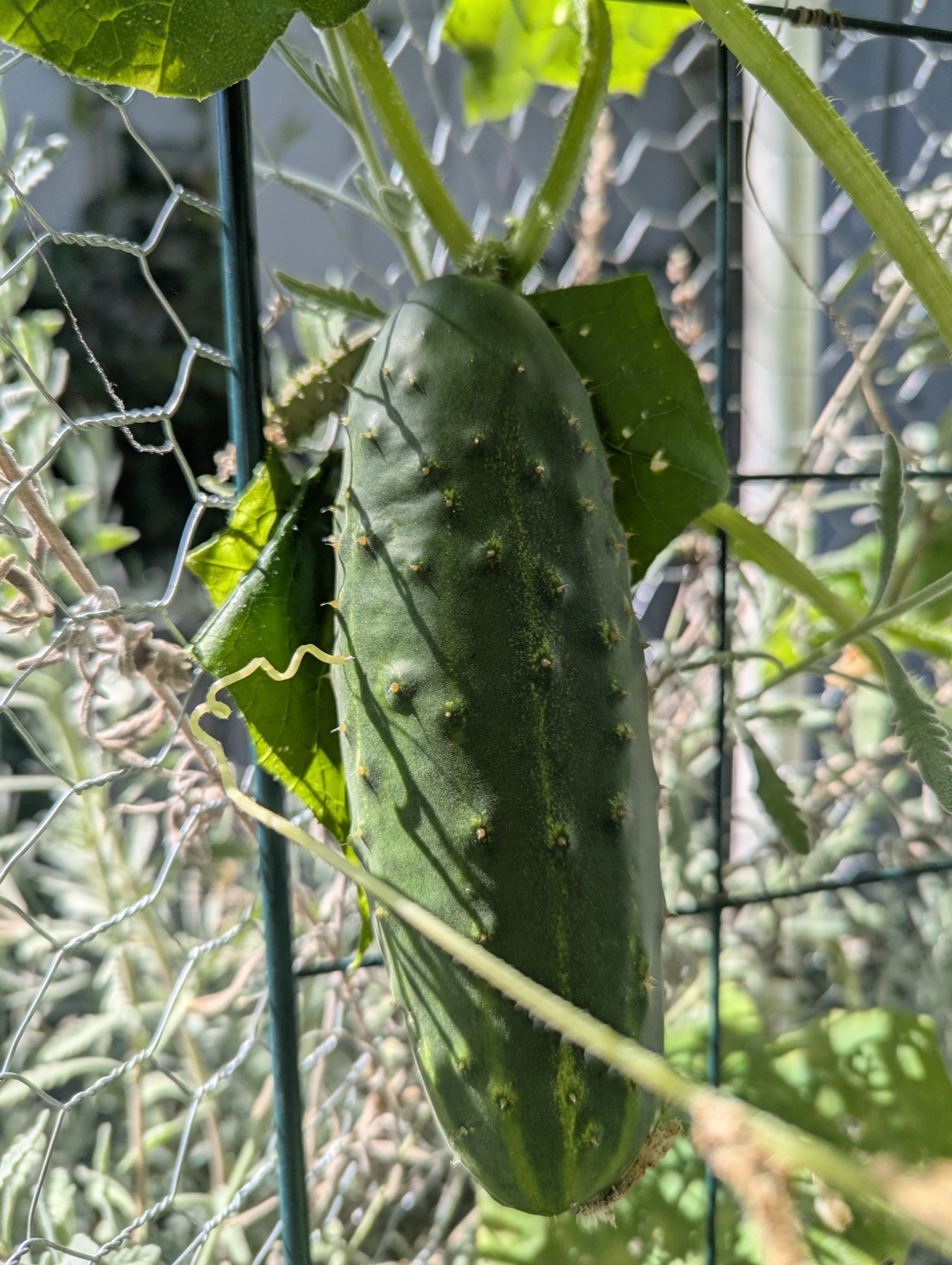
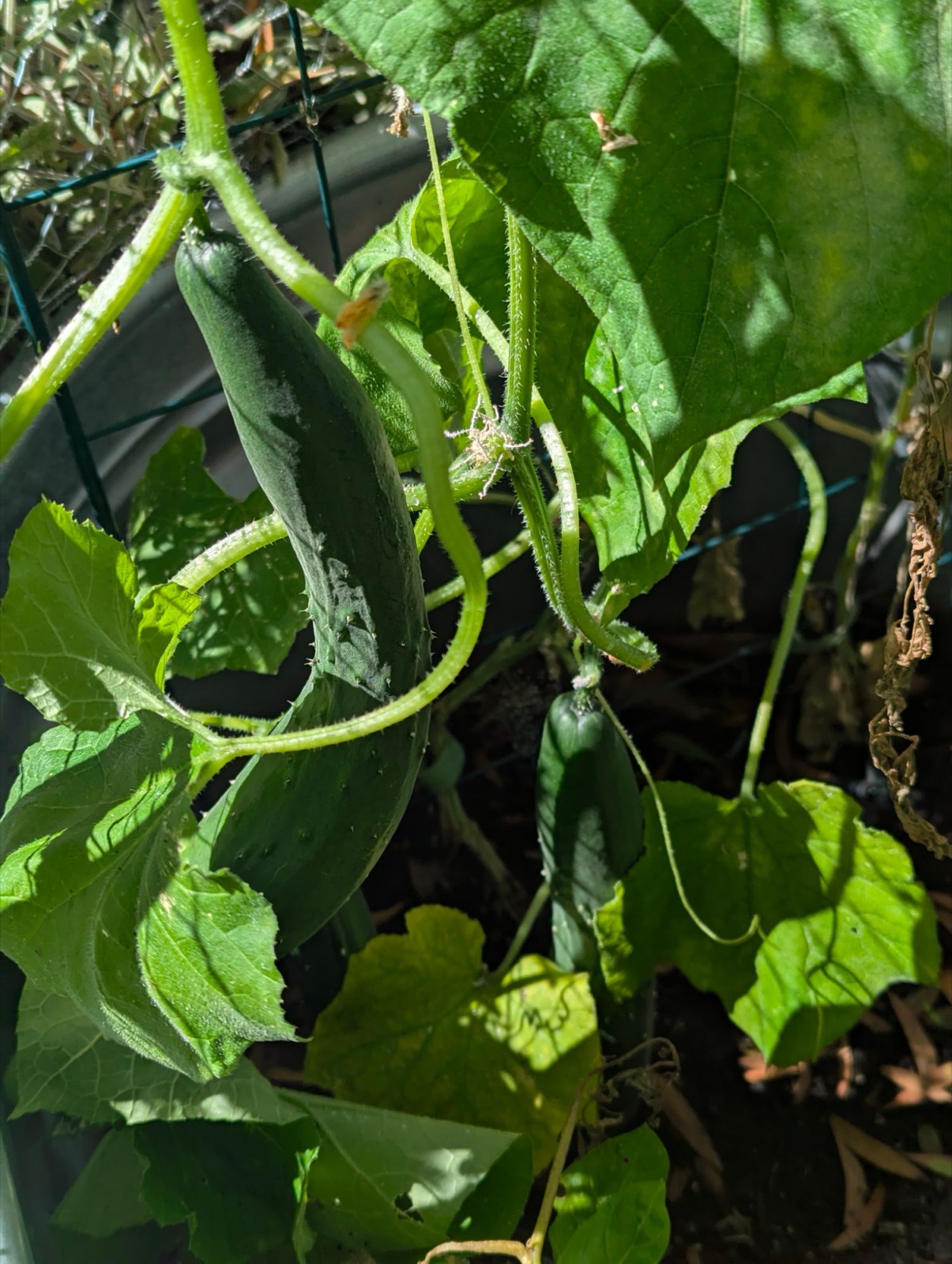
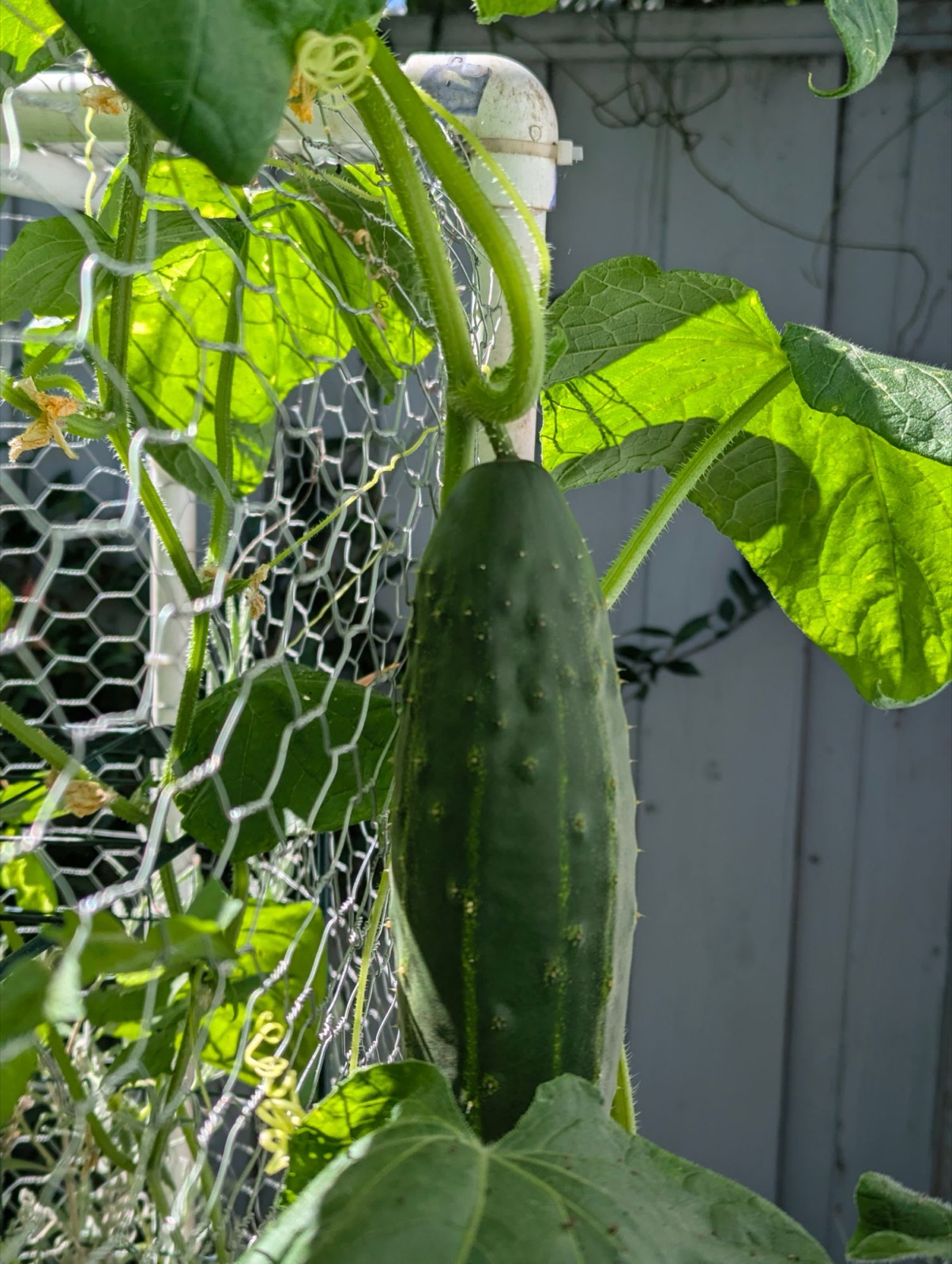
A pickling cucumber, I think, ready to pick, September 2026A Japanese long cucumber, I think, September 2026Some of the last cucumbers of the season, October 2026One of the last cucumbers on the trellis, October 2026
1 season
Cucumber
WorkedJapanese long and pickling, Summer 2026. Probably these two types. Both gave a great yield. The Japanese long plant died suddenly after its last harvest in October; the pickling one still has more cucumbers coming
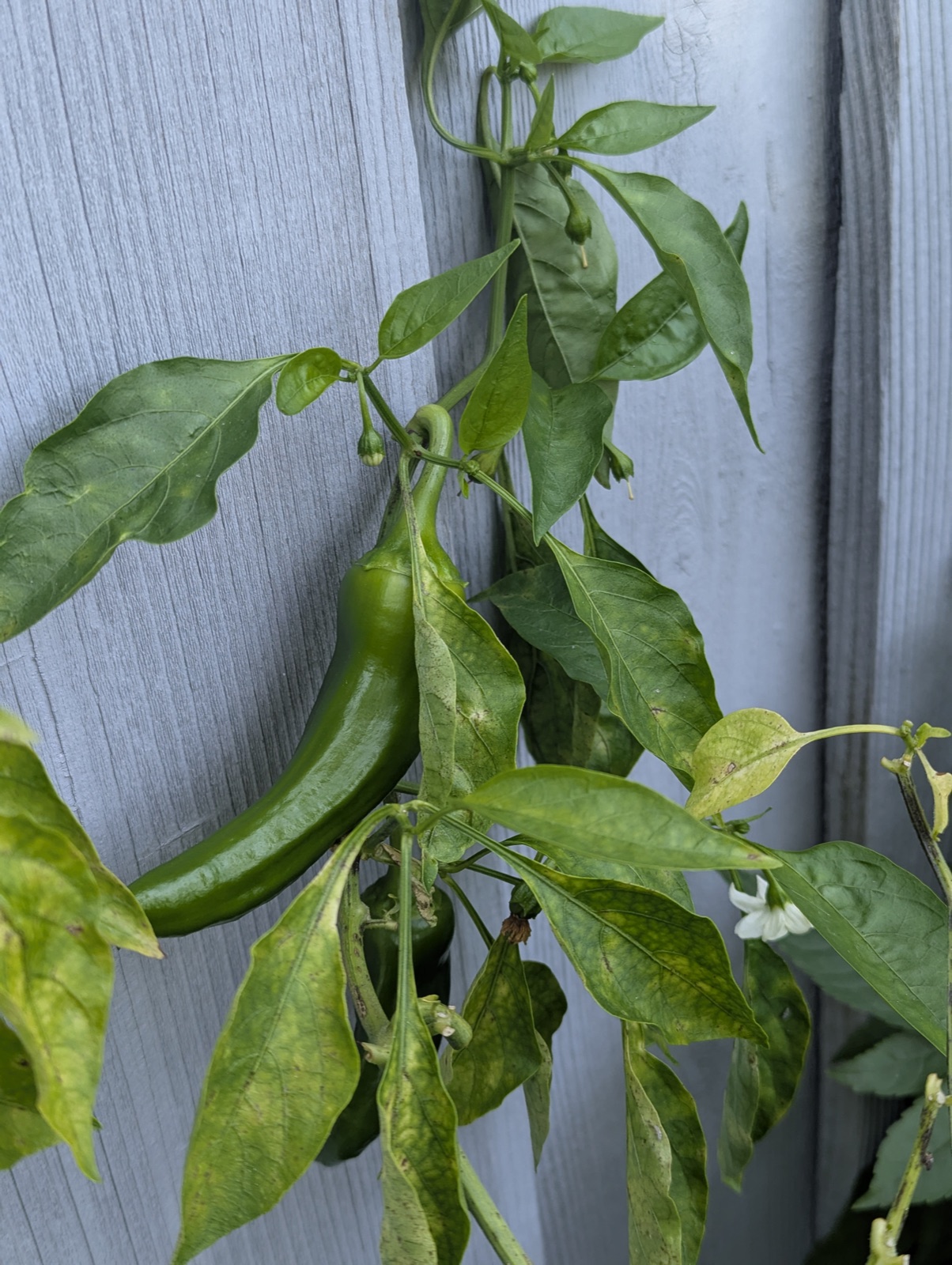
An Italian sweet pepper, September 2026
1 season
Italian Sweet Pepper
GrowingItalian Sweet Pepper, Summer 2026. Dries off and comes back each year, starting in spring
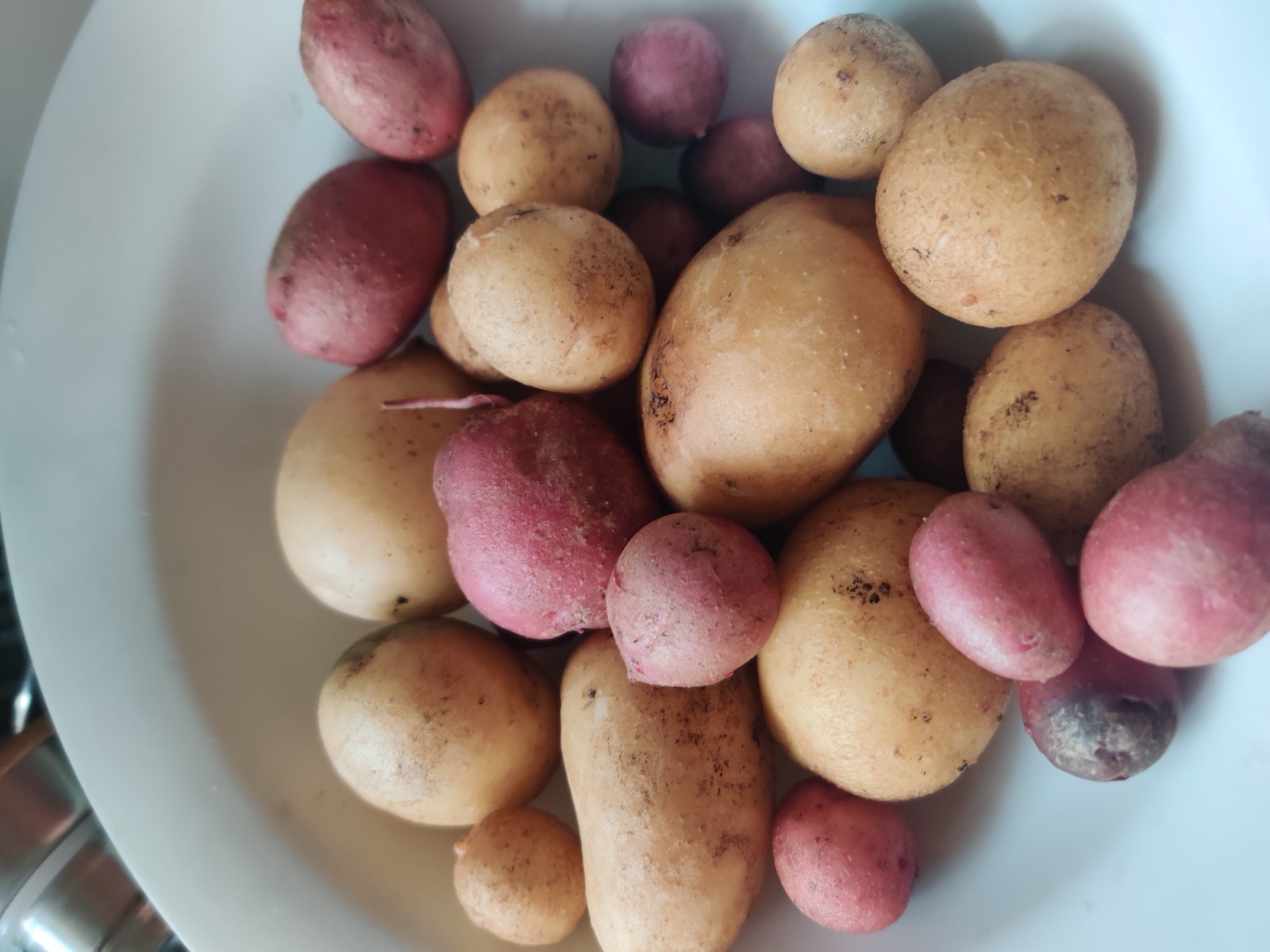
Red and yellow potatoes, February 2022
1 season
Potato
HarvestedRed and yellow, Winter 2022. Harvested February 2022
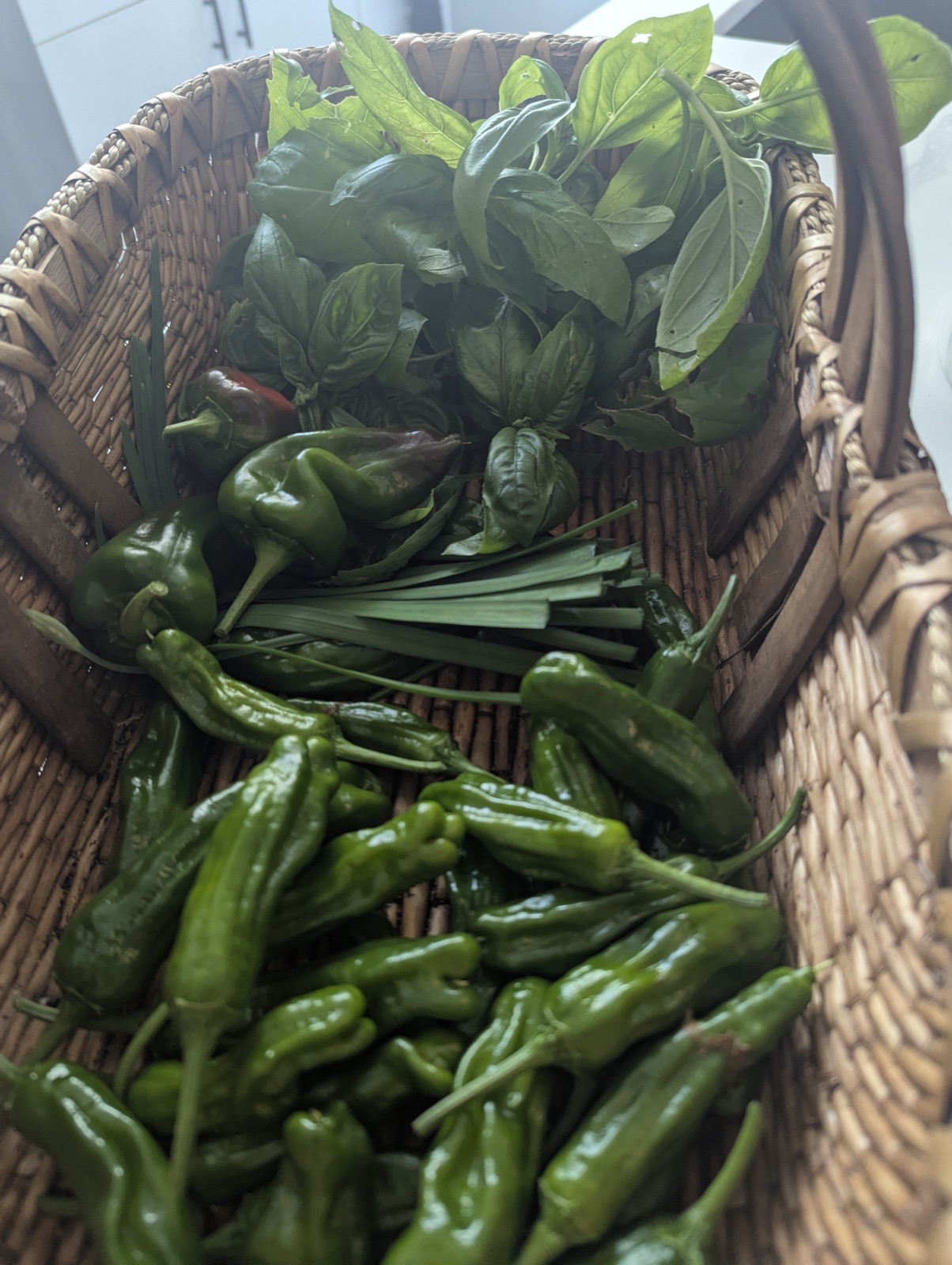
Shishito peppers and basil, September 2026
2 seasons
Shishito Pepper
HarvestedShishito Pepper, Fall 2024. Harvested November 2024
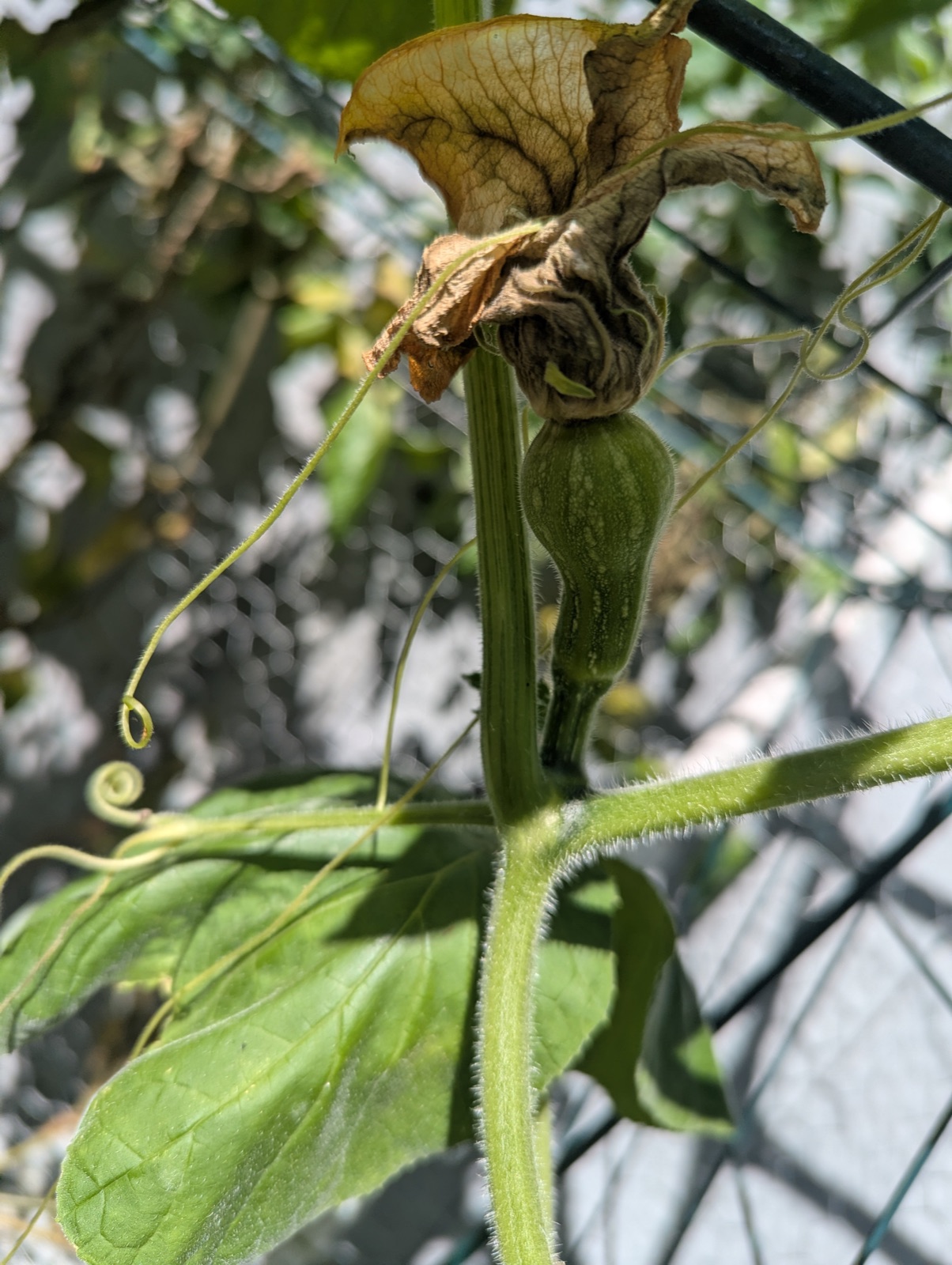
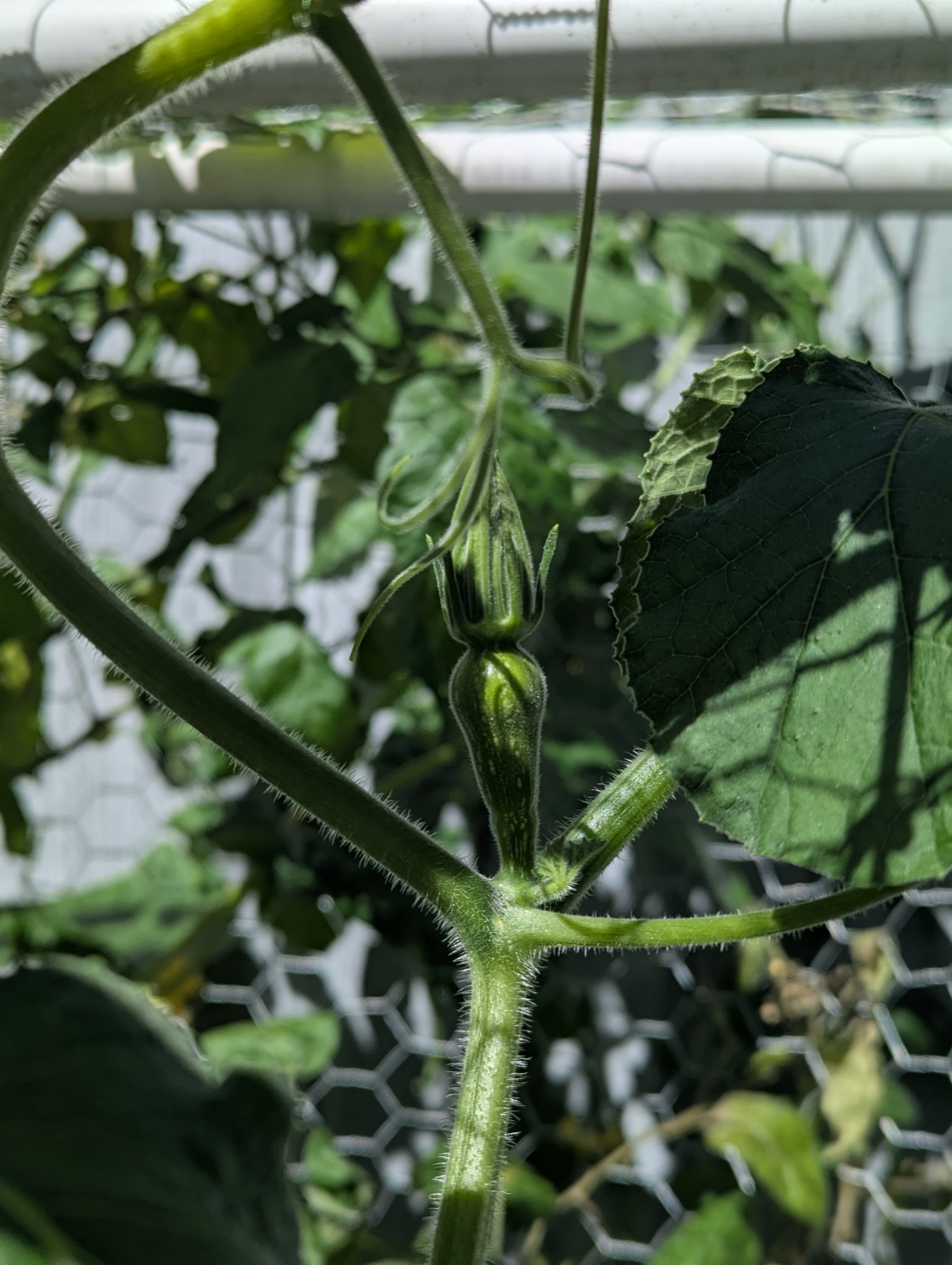
A tiny butternut squash forming under its flower, September 2026Butternut squash flower buds, September 2026
1 season
Squash
GrowingButternut, Summer 2026. First time growing butternut squash; planted in early August, so I'm learning as I go
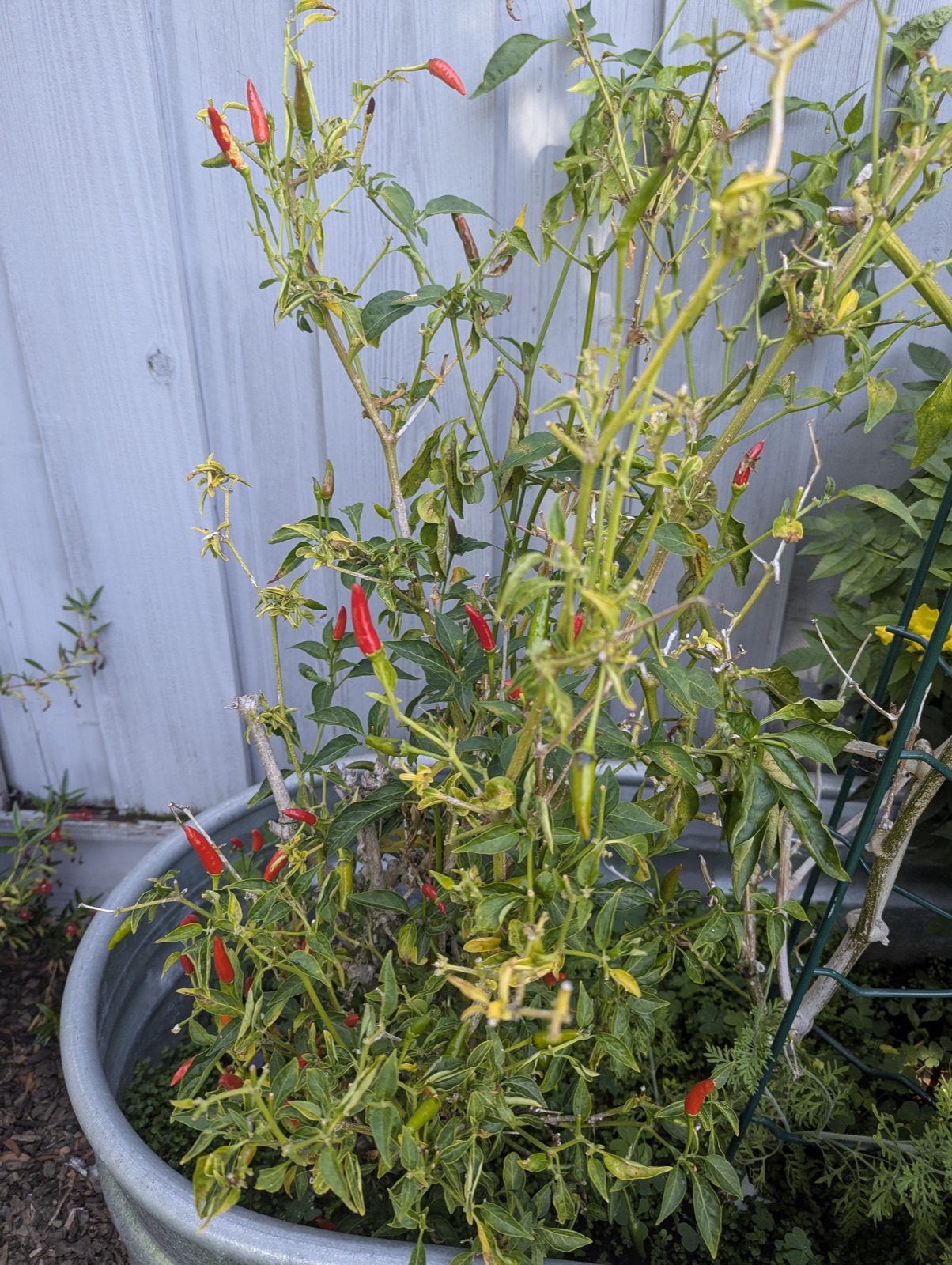
Thai chili peppers, most turning red, September 2026
1 season
Thai Chili Pepper
GrowingThai Chili Pepper, Summer 2026. Huge numbers of green chilies, so I give them away; left on the plant longer, they turn red. I cut it back and it comes back every year
Tomatoes
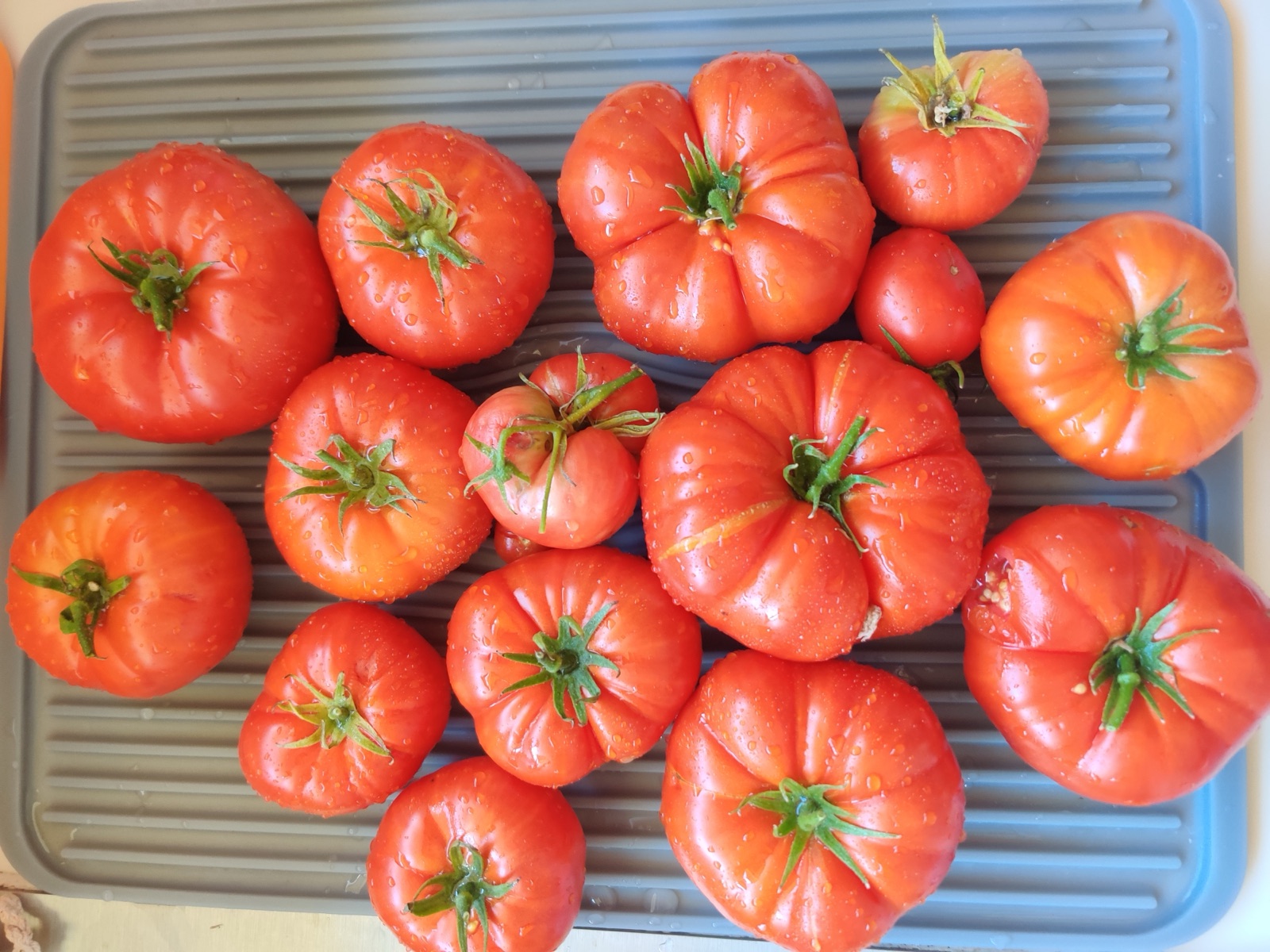
Tomato harvest, September 2021
Summer 2021Harvested
Beefsteak
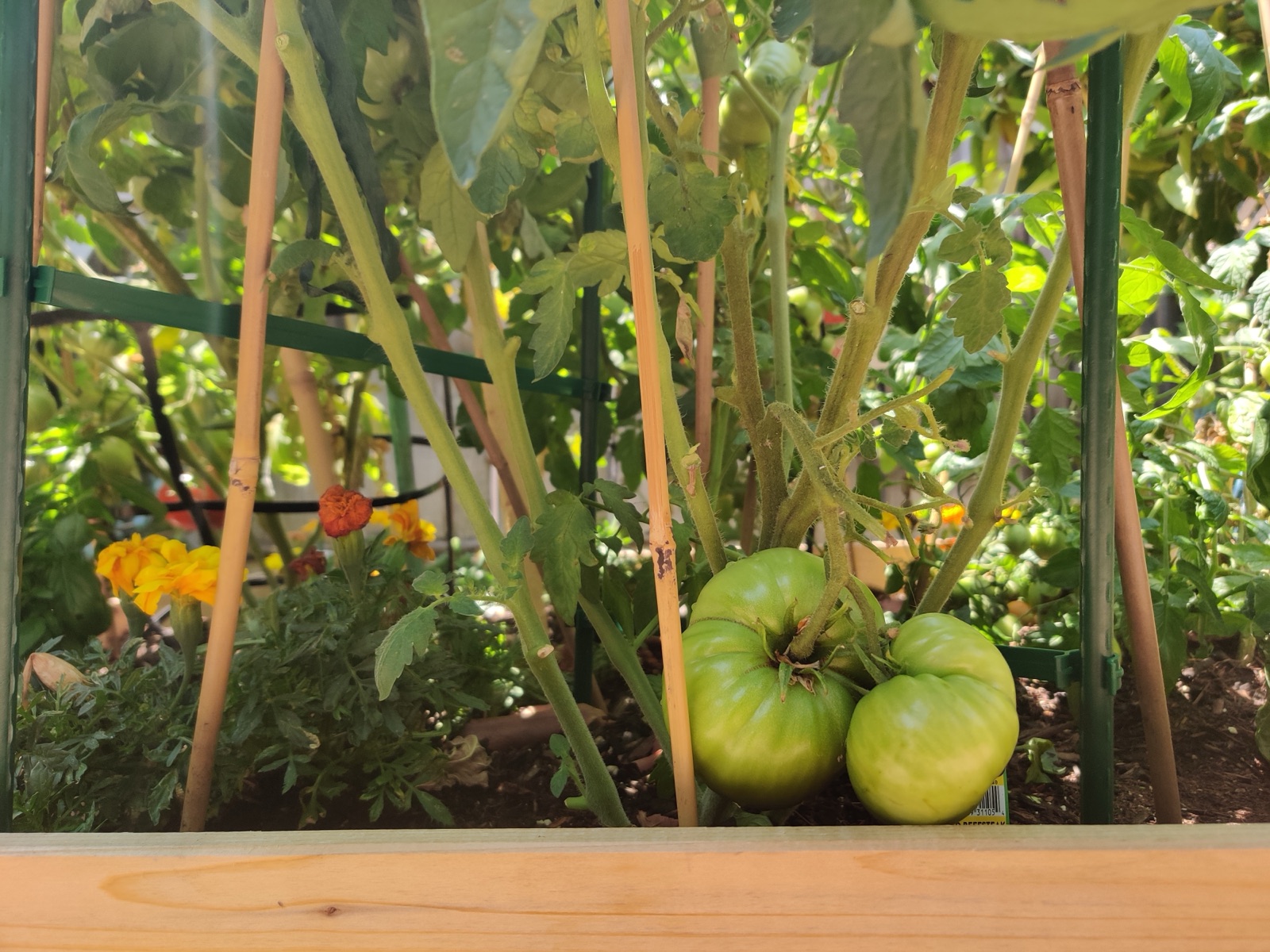
Great yield. Amateur planter, grown with marigolds. Green fruit late July; harvested September 2021.
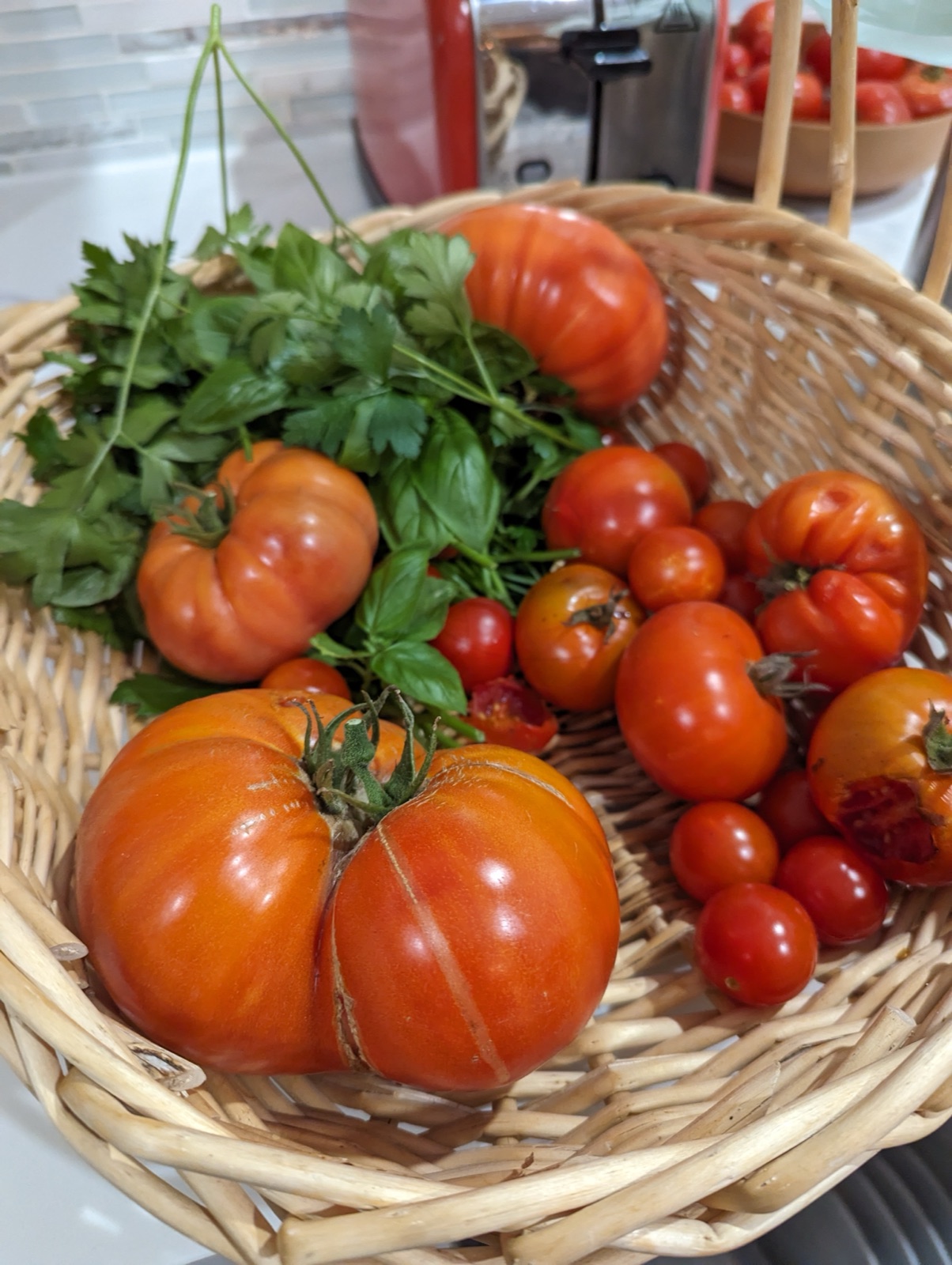
Beefsteak and cherry tomatoes with basil and parsley, October 2023
Fall 2023Harvested
Beefsteak & Cherry
Harvested October 2023 with basil and parsley.
Roma tomatoes, bitter melon, and shishito peppers, November 2024
Fall 2024Harvested
Roma
Harvested November 2024.
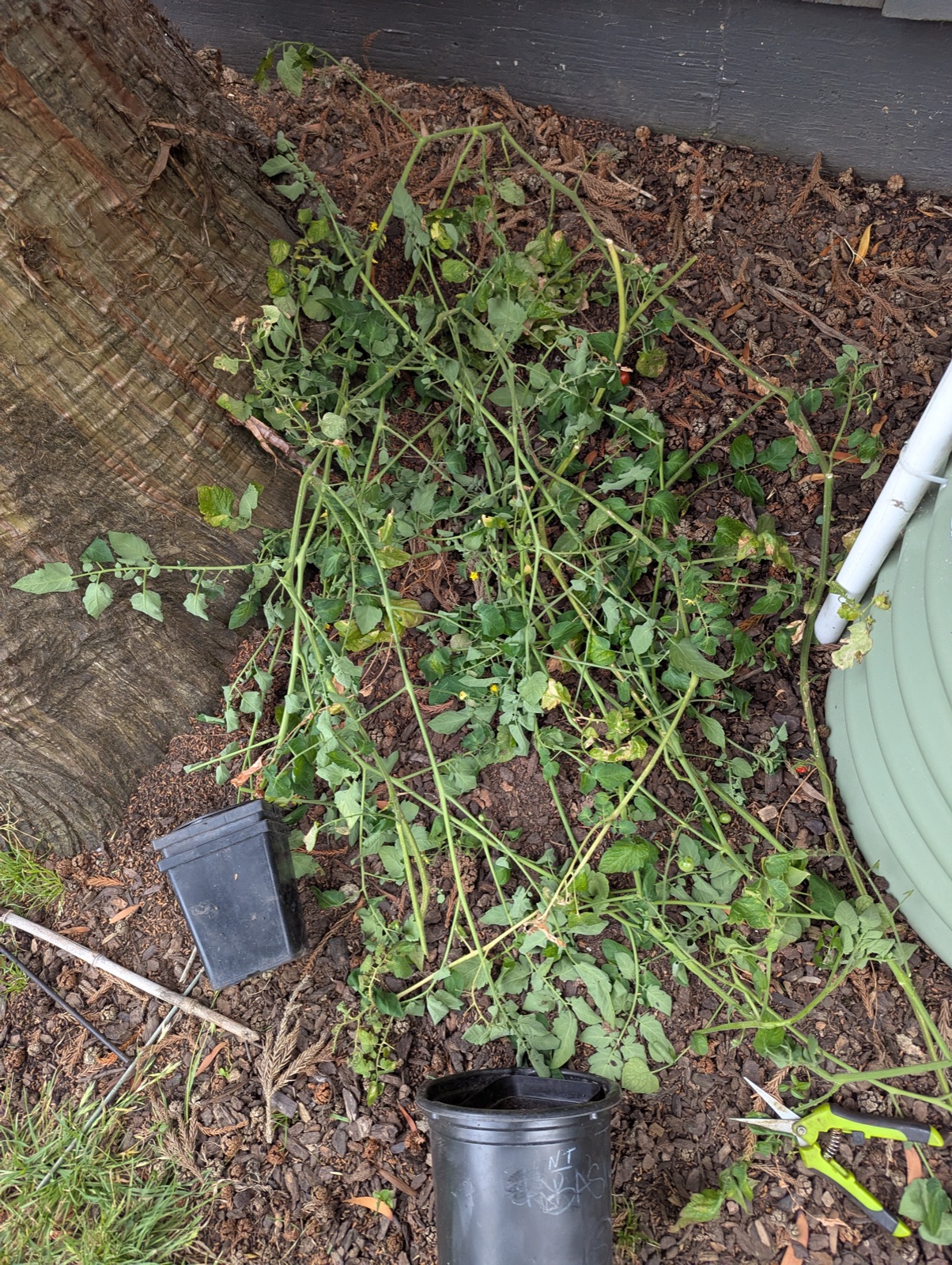
Tomato tops and suckers, July 2026. My Beefsteak and Black Krim plants grew tall early, so I trimmed them and donated the cuttings to the San Mateo Arboretum Society.
Summer 2026Worked
Beefsteak and Black Krim
Grew tall early on, so I topped them and removed suckers in July, and donated the cuttings to the Arboretum. Fruit set in early to mid July and started ripening in early August, later than usual because of the cooler summer. Black Krim is incredibly tasty and great in a caprese salad, but it doesn't produce as much as the Beefsteak.
Beefsteak: About 80 days from transplant to first ripe fruit, on tall, indeterminate vines with fruit up to 2 pounds (Burpee (opens in a new tab)). UC notes that beefsteak types are usually late to ripen (UC ANR (opens in a new tab)).
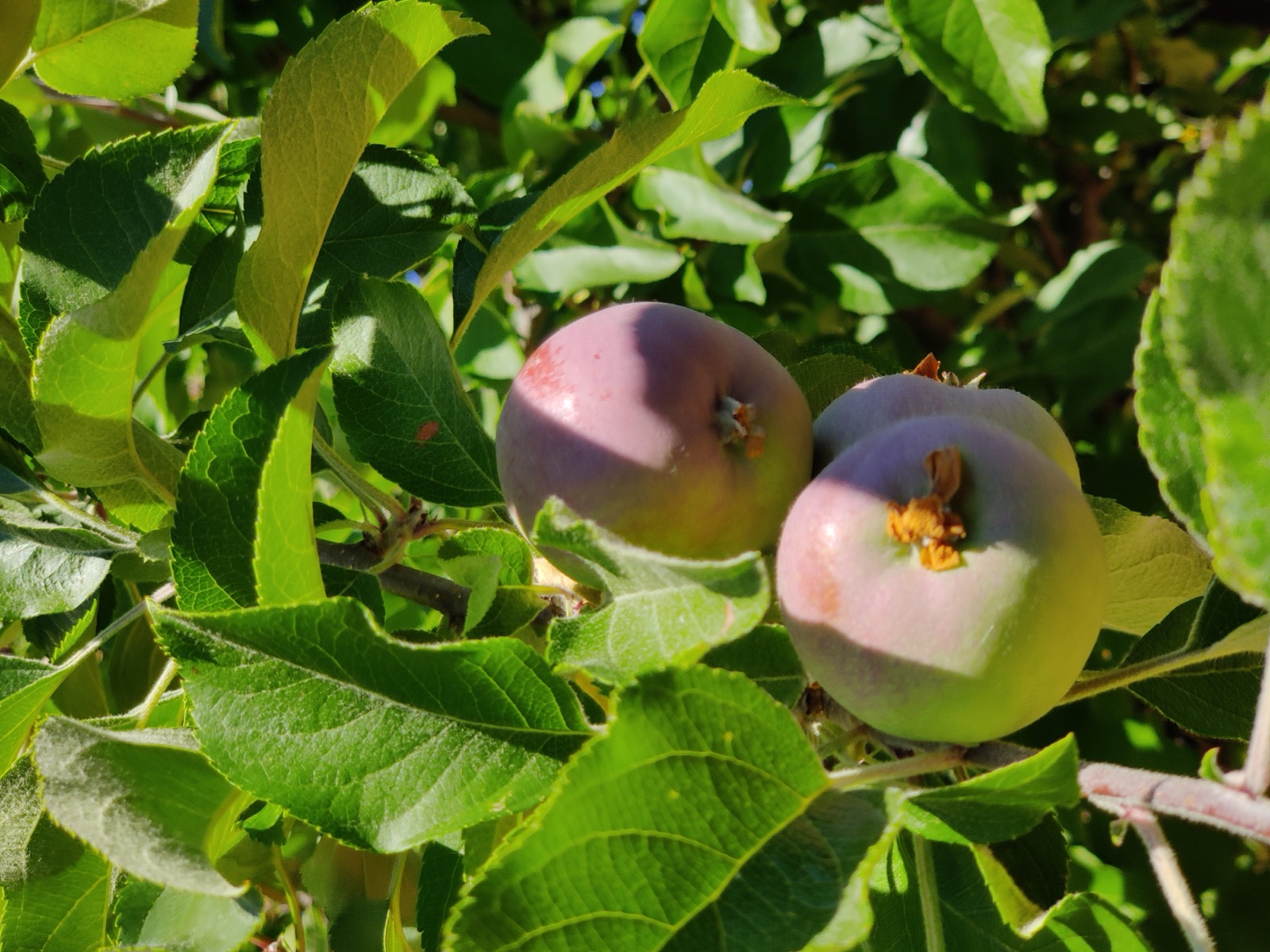
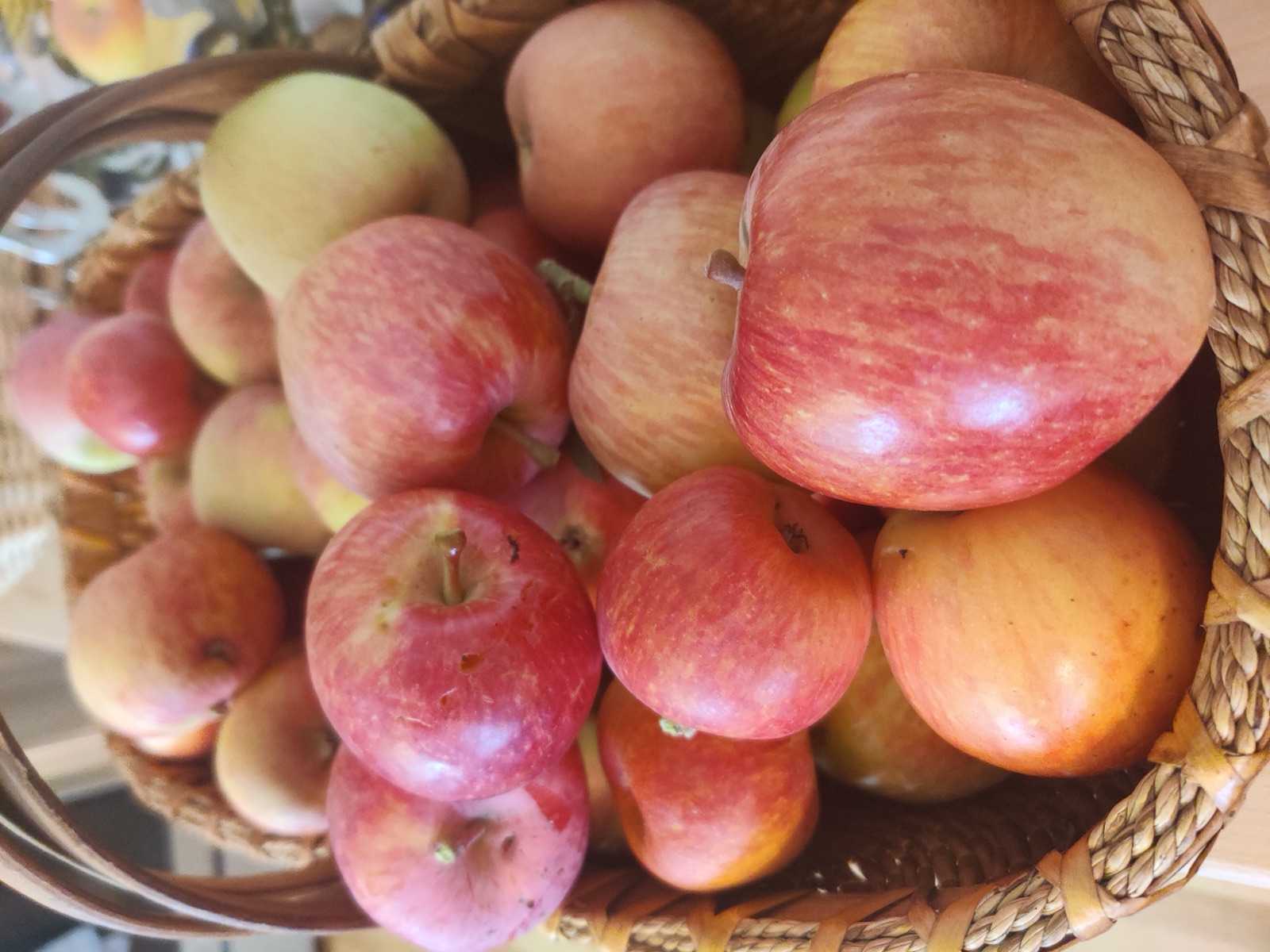
Young apples on the tree, June 2021Apples from the tree, October 2021
The tree Max loves
Apple
I had a good apple tree in our yard. That's when Max learned to love apples. He started playing with the dropped ones like they were balls, bit into one one day, and loved it. After that he'd go get himself an apple whenever he wanted a snack.
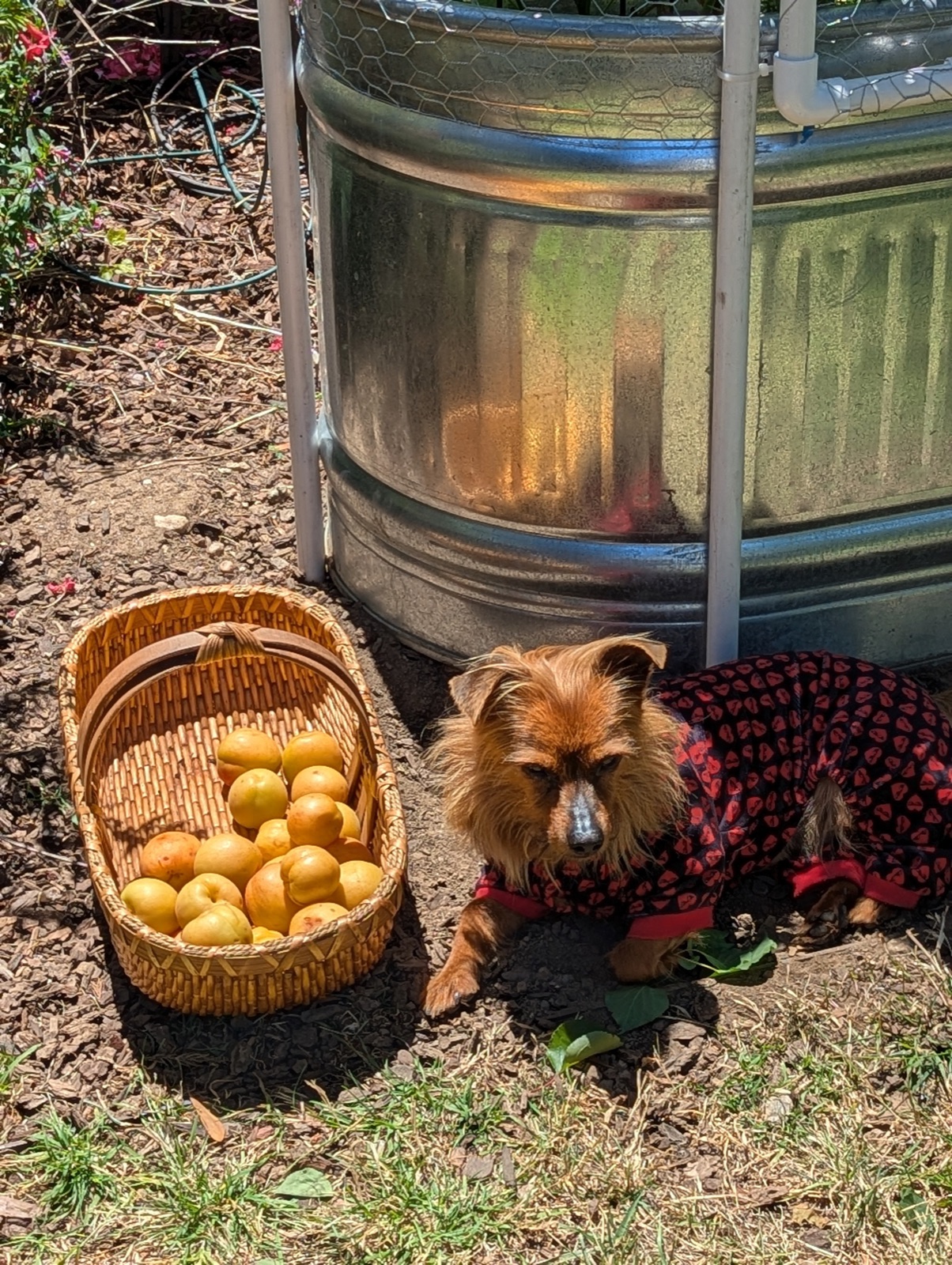
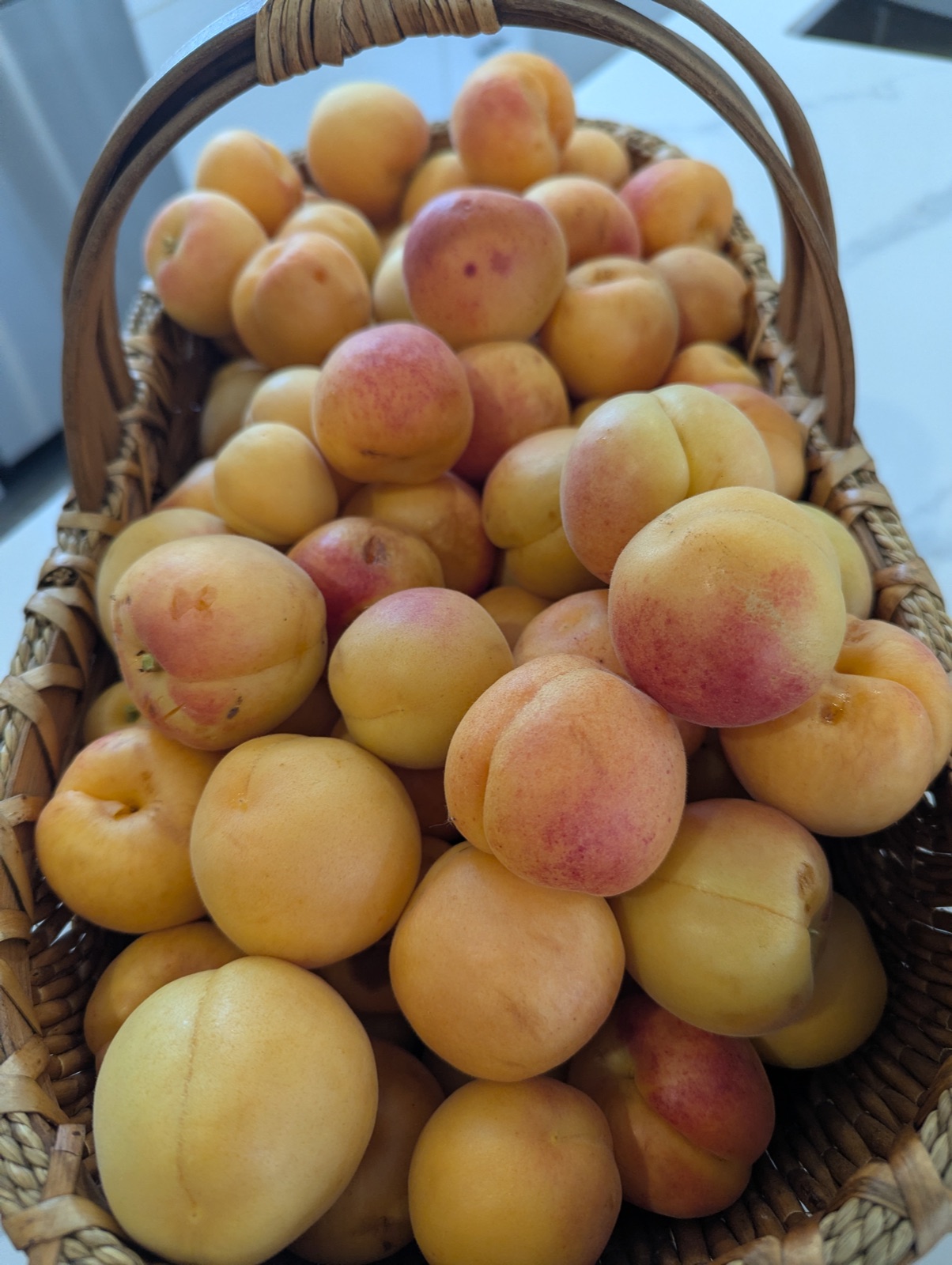
Apricots with Max, June 2025Apricot harvest, June 2026
Apricot
Apricot harvests from June 2025 and June 2026.
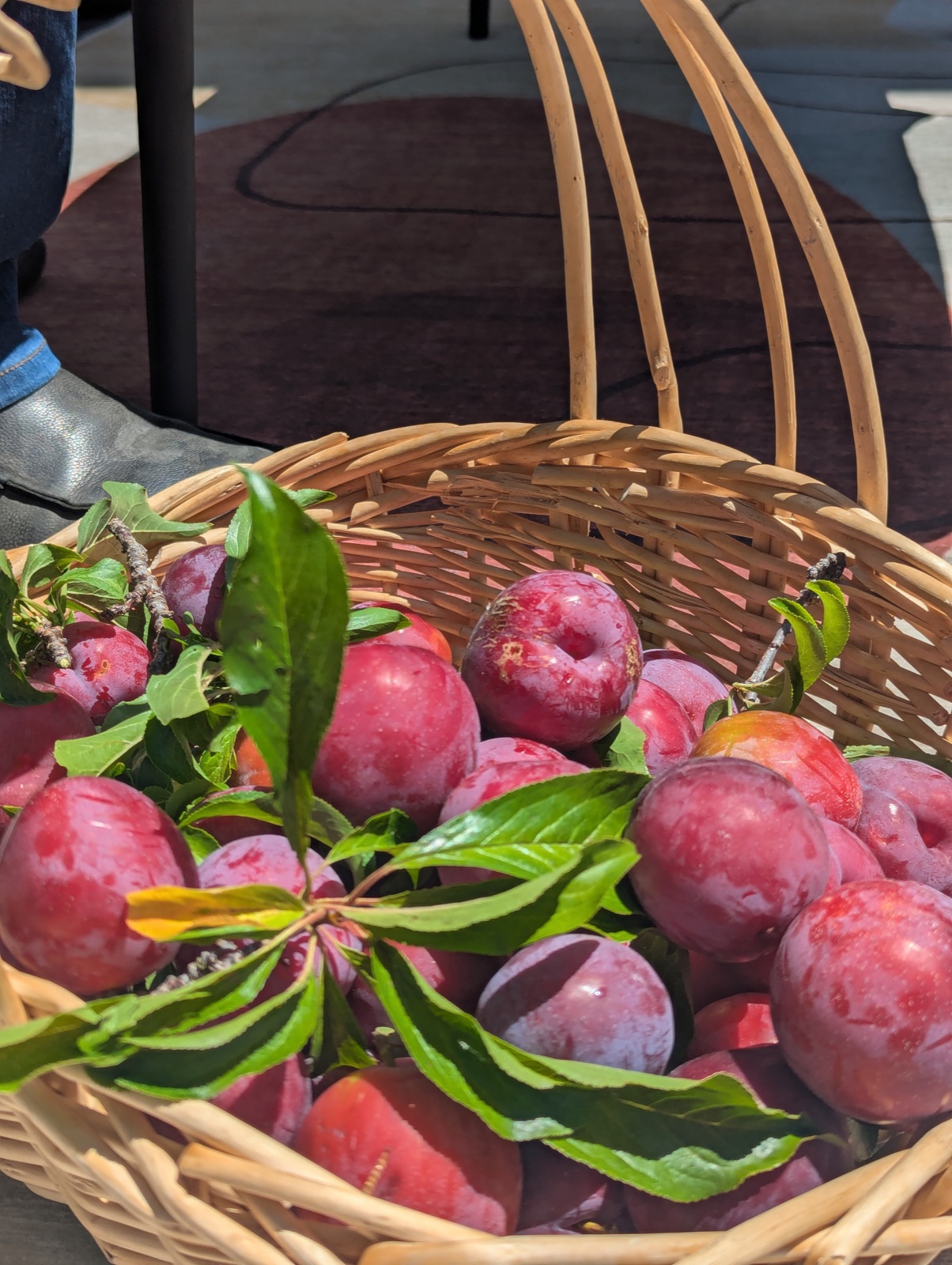
One of the last plum harvests of 2025
Struggling
Plum
This basket was one of the last plum harvests of 2025. A heat wave in February 2026 stressed the tree, and it isn't doing well this year.
Planting Checklist
Wait until nights stay above 55°F before planting tomatoes
Pick short-season tomato varieties for the foggy coast
Plan a mix of crops and varieties, not a monoculture
Plant pollinator-friendly natives and flowering plants around the planters
Give cucumbers a trellis to climb
Protect broccoli and cauliflower from rats
Season Care
Water cucumbers once a day when it's warm
Top tomatoes that grow too tall and remove the suckers
Wash off aphids, spray neem oil, and snip off the infested parts
Harvest broccoli while the head is still tight
Cut peppers back in fall, once they're done producing and start to dry out
Common Questions
Why are my tomatoes so late to ripen?
Tomatoes need warm nights to set fruit: below about 55°F, pollination fails (UC Master Gardeners (opens in a new tab)). On the foggy coast, summer days are often in the 60s and low 70s (UC Master Gardeners of San Mateo & SF (opens in a new tab)), and large beefsteak types are usually late to ripen (UC ANR (opens in a new tab)). Mine grow tall and flower, but fruit doesn't set until it warms up. This year it set in early to mid July and started ripening in early August, later than usual because of the cooler summer. Waiting for warm nights to plant, and choosing short-season coastal varieties like Stupice, Sun Gold, or San Francisco Sunrise, helps.
How do I grow butternut squash?
This is my first time growing it, so I looked it up. Butternut needs a long, warm season: about 105 days from seed, or about 91 from transplants (Johnny's (opens in a new tab)). UC Master Gardeners in Santa Clara County plant winter squash in May or June, once days are consistently above 75°F, and harvest from September to November (UC Master Gardeners (opens in a new tab)). I planted mine in early August, so it's a late start. The first flowers are male and often drop; the female ones have a tiny squash at the base, and cold, cloudy weather can cut pollination (UMN Extension (opens in a new tab)). It's ready when the rind is hard and the stem turns corky. Pick it before a hard freeze, leave a few inches of stem, and let it cure in a warm, dry spot for a week or two.
When should I harvest broccoli?
While the head is still tight. I left a full-grown one too long and it went to flower.
What ate my broccoli and cauliflower?
Rats got both of mine in 2025. They're the reason I lost that whole winter crop.
How do I deal with aphids on broccoli?
Wash them off with water, spray neem oil, and snip off the infested parts. That cleared mine long enough for my first broccoli harvest in July 2026. Later the aphids came back and the plant went to flower, so I'm not expecting a second harvest.
Why grow flowers next to vegetables?
For the pollinators. Cigar plant, monkey flower and magenta salvia bring them in, and my tomatoes produce well.
From My Garden
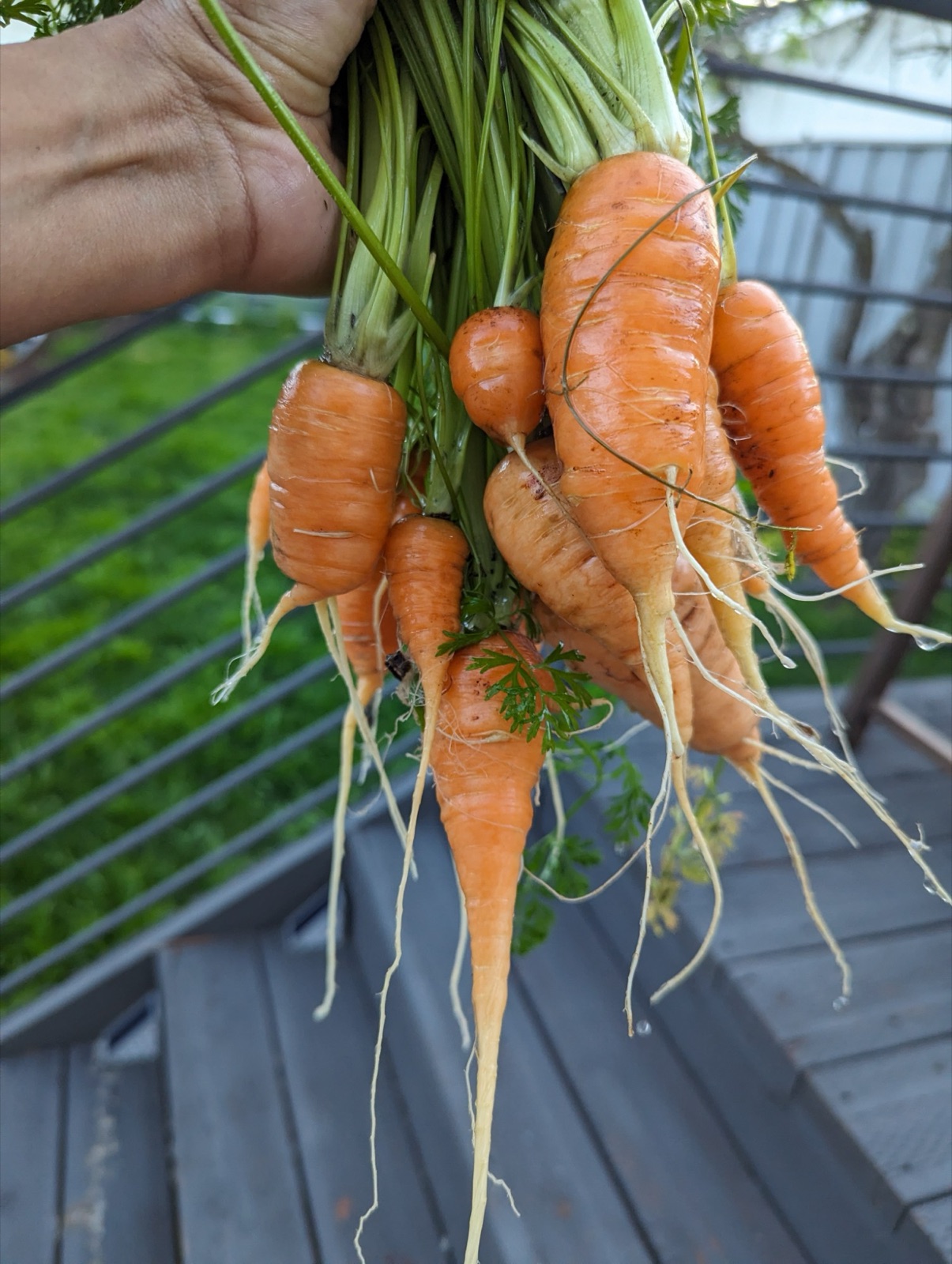
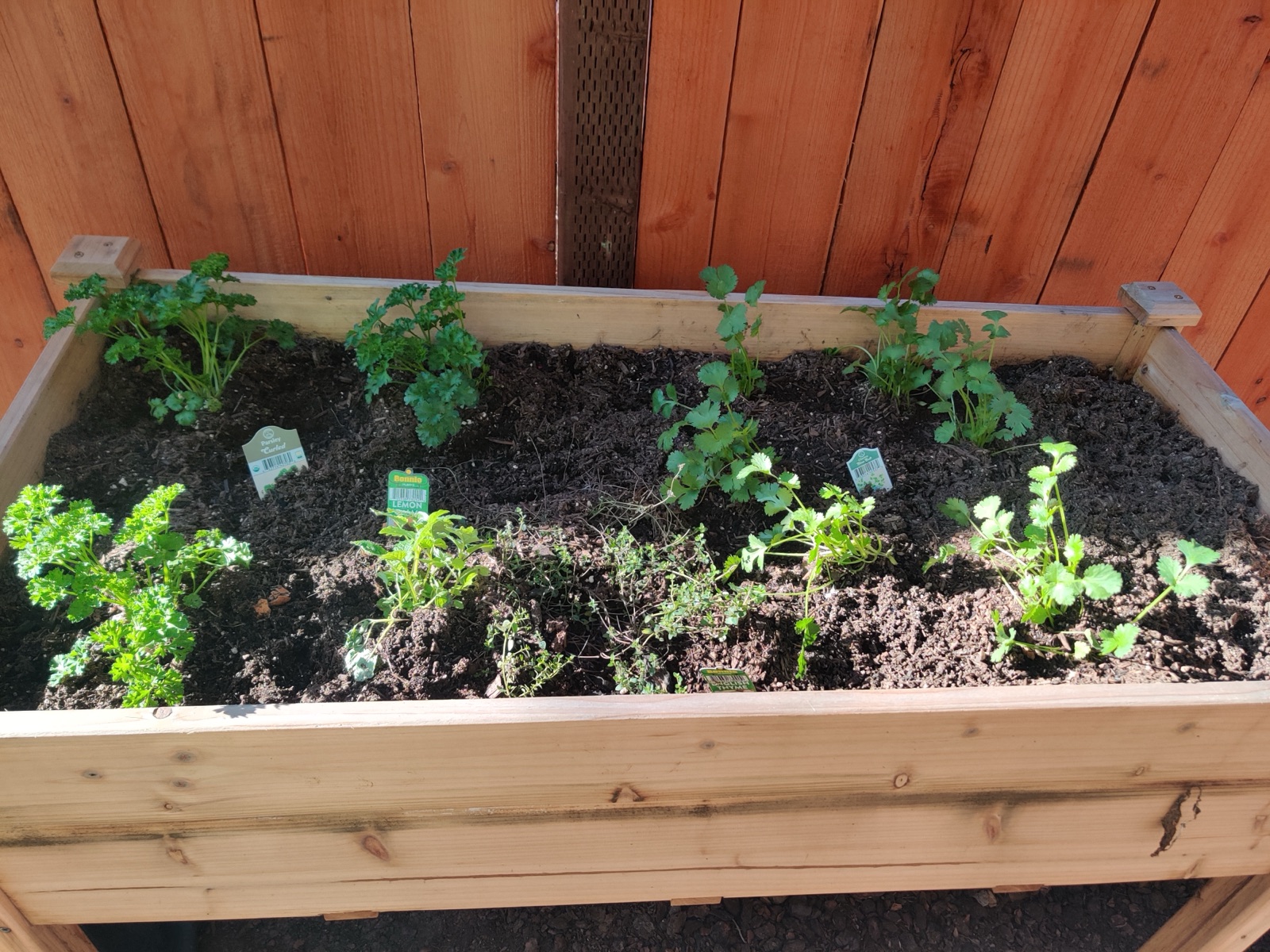
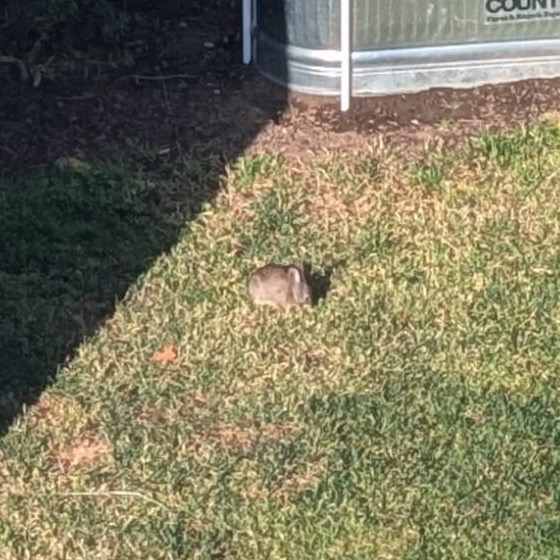
Carrots I harvestedA fritillary butterfly visiting the parsley planter, June 2024My first tomato planter, with marigolds, July 2021. It was an amateur version of the sturdy beds I have now, but it had a great yield.Herb bed, February 2022Tomato stock tank, September 2023A California brush rabbit on the lawn, 2025